
Breeds & Coat·5 min read
Caring for the coat of Dwarf Angora and Lionhead rabbits
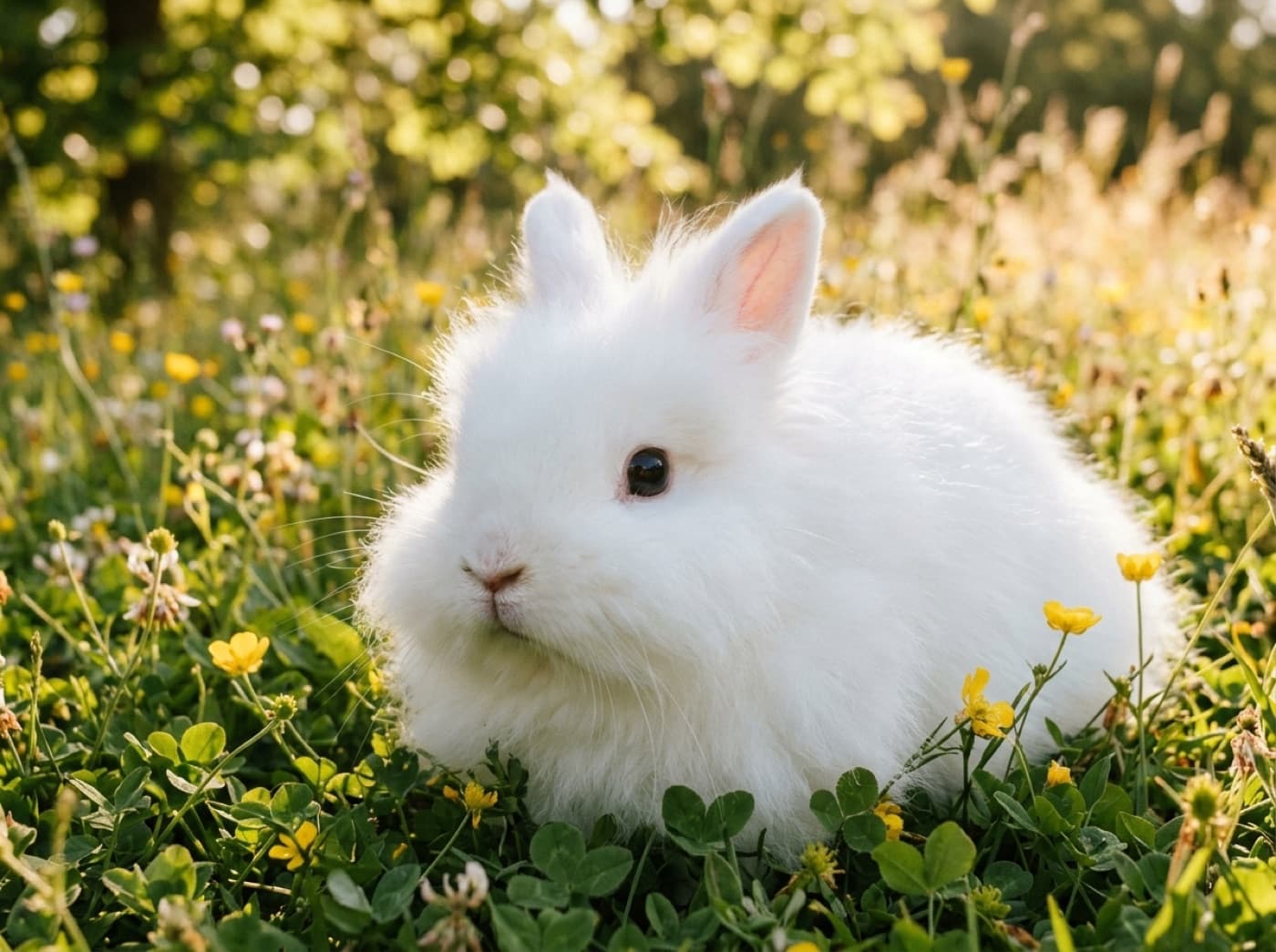
Silky fur, a fluffy mane and moulting seasons: our gentle routine for avoiding matted fur without ever washing your rabbit in water.
Updated on 9 November 2026
The essentials
- Never give a rabbit a full bath: water causes thermal shock and felts the wool.
- Brushing prevents excessive swallowing of fur during grooming, which can slow the gut.
- Favour short 5-minute sessions on the floor, paired with an aromatic leaf as a reward.
1. Why brushing is as vital as it is cosmetic
Unlike cats, rabbits cannot bring up the fur they swallow while grooming. On long-haired breeds like the Dwarf Angora, or on the Lionhead's dense mane, removing dead fur directly protects the digestive system.
Outside moulting periods, 2 to 3 weekly sessions are enough for a Lionhead and 3 to 4 for a Dwarf Angora; at the height of the seasonal moult, switch to a quick daily brush.
2. The right tools and the sensitive spots
Choose a soft cushioned brush or a slicker brush with protected pins (small balls on the tips so as never to scratch a rabbit's very thin skin), plus a wide-toothed rotating comb.
Check especially behind the ears, on the chest, the insides of the thighs and under the tail, where strands of hay can create little knots. If a mat has formed, always hold the base of the fur against the skin before untangling the tips.
3. No baths, ever: how to keep a spotless coat?
Rabbits are naturally very clean animals that spend several hours a day smoothing their coat. A full bath puts them in danger (intense stress, hypothermia because the undercoat takes hours to dry, burns from a hairdryer).
If its paws have simply touched a little damp earth after the dew, dab gently with a dry microfibre cloth and let it finish grooming in peace.